The short version: yes, if you’re 18 or over, you’re required to carry evidence of your registration at all times. What’s changed is that some of that evidence can now live on your phone — but not all of it, and the difference matters enormously.
This is one of those rules that sat quietly on the books for decades and then became something people actually get asked about. Enforcement has stepped up considerably since early 2025, so it’s worth knowing exactly where you stand.
Last updated: September 11, 2026.
The rule itself
Section 264(e) of the Immigration and Nationality Act is short and blunt:
Every alien, eighteen years of age and over, shall at all times carry with him and have in his personal possession any certificate of alien registration or alien registration receipt card issued to him pursuant to subsection (d). Any alien who fails to comply with the provisions of this subsection shall be guilty of a misdemeanor and shall upon conviction for each offense be fined not to exceed $100 or be imprisoned not more than thirty days, or both.
Our Very Own Wine Club!
“At all times” means at all times. Walking the dog, going to the gym, crossing a state line, catching a domestic flight.
What counts, and what can be digital
This is the part that’s changed, and it’s the reason this article needed updating.
USCIS now states that you can satisfy the requirement by carrying a mobile electronic device that displays your evidence of registration, or by printing out a copy. That covers documents DHS issued to you electronically.
It does not cover physical cards. If you were given an actual card, you carry the actual card.
Document
Can it be digital?
Form I-94 (and I-94W, I-94A)
Yes — on your phone or printed
USCIS Proof of Alien G-325R Registration
Yes — on your phone or printed
Green card (Form I-551)
No — carry the original card
Employment Authorization Document (Form I-766)
No — carry the original card
Foreign passport
Not required to be carried at all times
A photo of your green card on your phone is not compliance. I want to be very clear about that, because it’s the easiest mistake to make now that digital is allowed for other things.
What official documents you should carry if you have a green card
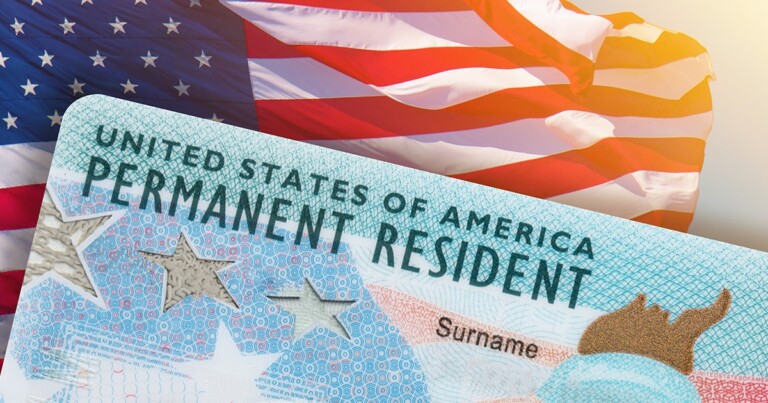
You carry the card. USCIS is unambiguous: if you’re 18 or over you must always carry your green card, EAD, or other proof of registration.
I know the objection, because everyone has it. Carrying the single most valuable document you own around all day feels like an excellent way to lose it, and replacing one is slow and expensive. That’s a fair worry and the law doesn’t care about it.
If your card has expired and you’ve filed for a replacement, the general guidance from immigration attorneys is to keep carrying the expired card together with your receipt notice, rather than leaving both at home. If you’re in that situation, or you’re waiting on a first card after adjusting status, talk to an attorney about what you specifically should be carrying — there are a few variations depending on where you are in the process.
What official documents you should carry if you’re on a visa
For most Australians here on an E-3, O-1, H-1B or similar, your registration evidence is your Form I-94.
That’s the good news, because the I-94 is electronic and has been for years. You can print your I-94 from the CBP website or keep it on your phone. Both satisfy the requirement.
A couple of things worth getting right:
If you were issued a paper I-94, carry the paper one.
An admission stamp in your passport also counts as evidence of registration, which is why some people simply carry the passport.
If you have an I-797 approval notice from a change or extension of status and haven’t left the country since, the I-94 printed at the bottom of that form is your current record.
Do you have to carry your passport?
No. You’re not required to carry your foreign passport at all times.
You’re required to carry evidence of registration, and for most visa holders that’s the I-94 rather than the passport itself. The passport becomes the relevant document when the admission stamp inside it is what you’re relying on as your evidence.
Practically, most people don’t want to carry a passport daily. It’s bulky, it’s expensive to replace, and losing it creates a genuine headache with your consulate. Carrying your I-94 on your phone plus a photo ID does the job for daily life.
Flying domestically is different, and it’s worth saying plainly: your passport works as ID in every state, which isn’t true of every other document. Since REAL ID enforcement began in May 2025, some people have found their state license isn’t accepted at the TSA checkpoint. A passport always is.
What actually happens if you don’t carry it
The statute says a fine of up to $100 or up to thirty days. You’ll also see immigration firms citing a maximum closer to $5,000, because general federal sentencing provisions override the old dollar figures written into much older statutes. Congress’s own research service declines to name an amount at all, which tells you something about how settled this is.
Honestly, the fine is not the risk worth worrying about.
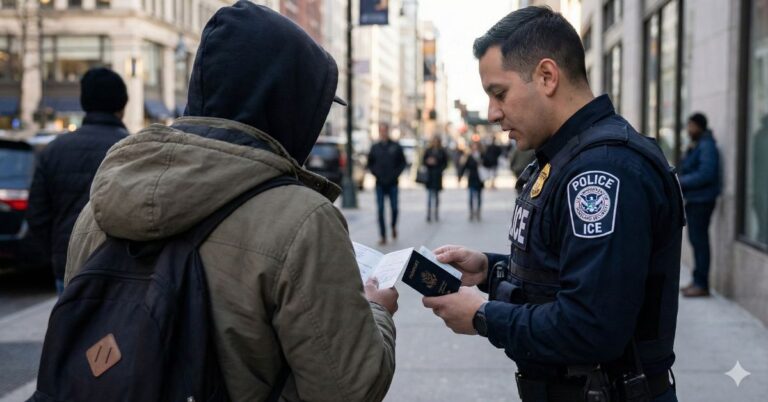
The risk is what an encounter looks like when you can’t produce your documents. Questions about your status, time you didn’t plan to spend, a note on a record somewhere, and potentially a much longer conversation than you wanted. For anyone on a temporary visa, whose next renewal involves an officer exercising discretion, that’s the part that costs you.
Carrying the documents is free. Not carrying them is a gamble with poor odds and no upside.
What changed in 2025 and 2026
Context helps here, because plenty of people have noticed this getting more attention and assumed a new law was passed. It wasn’t — an old one started being enforced.
Executive Order 14159, signed on January 20, 2025, directed DHS to make sure non-citizens comply with the registration duty that has existed since 1940. DHS issued an interim final rule that took effect on April 11, 2025, creating Form G-325R for people who weren’t already registered. On June 29, 2026, DHS published a final rule adopting that interim rule and making further technical changes.
Most Australians reading this were registered automatically. If you were issued a visa at a consulate, inspected at a port of entry, or granted status by USCIS, you’re already registered and your I-94 or green card is your proof. There’s a fuller explanation in our guide to the Alien Registration Requirement.
There’s also a September 2026 interim final rule dealing with children born in the US to foreign government employees, which is currently subject to a court injunction and not being applied to the affected class. If that describes your family, get advice rather than relying on anything you read online, including this.
A sensible setup
What I’d suggest, based on having done this for years before naturalizing:
Green card holders: the card, on you.
Visa holders: your I-94 saved to your phone, and a photo ID.
Everyone: a screenshot rather than a link, so it works with no signal.
At home: copies of everything, plus a scan somewhere you can reach from anywhere.
Traveling domestically: bring the passport if your state license isn’t REAL ID compliant.
I’m not an attorney, and this is general information rather than advice about your situation. This area has changed three times since April 2025, and it’s likely to change again.
If you’re in any of the more complicated positions — an expired card, a pending application, a family member who isn’t sure whether they’re registered — that’s a conversation worth having with an immigration attorney rather than a blog.
This article is general information and not legal advice. Requirements change, so confirm the current position with USCIS or a qualified immigration attorney before relying on it.
Josh Pugh is the founder and CEO of America Josh, the largest community for Australians living in the United States — a network of more than 75,000 members across all 50 states, grown in part through the acquisition of the Australians in the USA and Aussies International communities. Originally from South Australia, Josh moved to New York in 2017 and became a US citizen in October 2025 — so the advice he publishes comes from having personally navigated the whole journey, from the E-3 visa to citizenship. Through America Josh he has written hundreds of practical, first-hand guides on moving to and living in the US: visas and immigration, taxes, healthcare, banking, housing and settling into life in New York City. Josh is also President of Variety – the Children's Charity of New York and Founder & CEO of Fortnight Digital. He lives in the New York area with his wife Stacey and their two sons, Danny and Liam.
3 thoughts on “Do I need to carry my passport, green card, and visa at all times in 2026?”
I cannot speak for other states; however, Washington (WA) does not issue an Enhanced Driver’s License, which is Real ID compliant, to non-US citizens. Therefore, a Green Card holder can only obtain the standard Washington state license. It’s all a bit hard to comprehend, as I have both a Green Card and a Global Entry card, both of which are Real IDs. To avoid the risk of losing my Green Card, I have been traveling domestically with my Global Entry card, which has served as a valid Real ID.
I think that one alternative for those who are concern about losing their green card if they carry them all the time would be to get a “Real ID” driver license which is not what the law says, but it gives the peace of mind of carrying an ID without risking their green card.
The main reasons that i suggest the Real ID are: it is required a Proof of identity that includes proof of lawful status to get one and it has been advertised that it will improve the reliability and accuracy of state-issued identification documents. I understand that it will be required beginning October 1, 2020, if someone wants to use the driver’s license to board commercial aircraft on domestic flights.














 Related to: Immigration Documentation RequirementsWhat Documents Should You Carry at All Times as a Non-Citizen in the US?
 Related to: US ImmigrationGreen Card – Permanent Resident USA Card in 2026
 Related to: Immigration LawAlien Registration Requirement – What Is It and Do You Need to Register?
 Related to: Immigration Visa LotteryA Green Card Success Story by an Australian Expat
 Related to: E-3 Visa Green CardCan you change from an E-3 Visa to Green Card in 2026































I cannot speak for other states; however, Washington (WA) does not issue an Enhanced Driver’s License, which is Real ID compliant, to non-US citizens. Therefore, a Green Card holder can only obtain the standard Washington state license. It’s all a bit hard to comprehend, as I have both a Green Card and a Global Entry card, both of which are Real IDs. To avoid the risk of losing my Green Card, I have been traveling domestically with my Global Entry card, which has served as a valid Real ID.
Hi Josh,
Very good post!
I think that one alternative for those who are concern about losing their green card if they carry them all the time would be to get a “Real ID” driver license which is not what the law says, but it gives the peace of mind of carrying an ID without risking their green card.
The main reasons that i suggest the Real ID are: it is required a Proof of identity that includes proof of lawful status to get one and it has been advertised that it will improve the reliability and accuracy of state-issued identification documents. I understand that it will be required beginning October 1, 2020, if someone wants to use the driver’s license to board commercial aircraft on domestic flights.
If someone wants more info, i read it on DMV web’spage: https://dmvnv.com/realid.htm
Thanks, Felipe! Great tip.